Zaen
One Thousand and One NightsZaen’s courtship of Della de Courville begins in childhood and becomes a defining measure of the difference between romantic persistence and being truly understood. He proposes every week for years, but the grand pattern of his pursuit cannot win her heart until he stops treating marriage as a prize to secure and offers her a friendship bracelet that honors their life together. At the fountain, Della accepts his thousand-and-first proposal on the condition that he remain her dearest friend.
Identity and Background
Della describes Zaen as having begun courting her when she was six and he was seven. His first love letter and marriage proposal arrived on the first day of the week, the same time Della learned to read and Zaen had barely learned to write. The weekly ritual continued through changing weather and occasions, and through Della’s repeated refusals. Its constancy becomes so familiar that she describes having to answer his letters as an obligation of rank, even as the responses try her patience.
The social distance between them is explicit: Zaen is a groom, not a nobleman or wealthy merchant. Della’s companions treat that status as an obstacle to marriage, while Della insists that she and Zaen are friendly acquaintances, nothing more. Yet one companion observes that Della expects his proposals and speaks as if they have never been apart. The gap between her formal rejection and their everyday closeness marks the relationship’s central tension: familiarity is already there, but Della does not trust the meaning Zaen gives it.
Courtship and Objectives
Zaen’s proposals are not merely a repeated declaration; he tries to make each offer persuasive through gifts and gestures. On one occasion, he acquires a black horse for Della, confident that this time she will accept. He explains that she likes spirited mounts and says he does not need to charm her because she is his true love. The confidence of the gesture contrasts with Della’s continuing resistance: knowing something she likes, and declaring love, are not yet the same as showing that he understands how she sees herself.
The horse also foreshadows the more personal meaning of his eventual gift. In the bracelet’s story, Zaen recalls Della’s first pony and the spirited stallion that threw her off before he caught her. He remembers that moment as the first time she smiled at him. The earlier gift presents a mount as a persuasive offering; the later bracelet turns the history around it into evidence of attention, shared experience, and friendship.
Zaen’s efforts also intersect with a change in his standing at the De Courville household. After Della’s father discovers the hidden fortune and offers him the chance to take what he needs, Zaen pockets a small handful of gold coins. The two men then return to the house, where Della’s father introduces him to Della’s mother as his new treasurer, praising his quick mind for numbers and saying he is too valuable to remain only a groom. The recognition alters Zaen’s role in the household, but his eventual success with Della does not rest on wealth or rank.
The Bracelet and Reconciliation
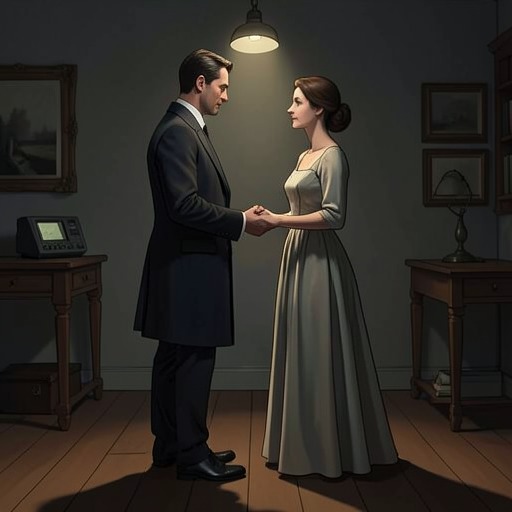
At the fountain, Zaen approaches Della differently from the way his recurring proposals have led her to expect. He acknowledges that she may never love him and offers to leave her alone; before doing so, he wants to give her something. He draws an item from his worn trouser pocket, takes her hand gently, and places it in her palm. Della looks down, and a smile gradually reaches her eyes.
The item is a handmade friendship bracelet. Zaen explains its strands through events in their shared past: white horsehair recalls how they met, when Della got her first pony; red recalls the stallion that threw her and the moment he caught her; black comes from the mare he gave her. He describes the mare as regal outside but sweet in spirit, like Della. A bead for each of them bears their carved initials, work that took him many evenings. Rather than offering an abstract promise or an expensive ornament, he makes the bracelet a record of how he has known her over time.
That difference changes the meaning of the courtship. Della says she had not believed Zaen truly loved her: his poetry and pretty words had not shown her an enduring love she could recognize in her heart. She did not want gold and diamonds. What she wanted was someone willing to trust her with what he did not have and believe she could love him in return, despite the assumption that she was a spoiled girl who cared only for jewelry. Zaen answers that he had always known her better than that; the bracelet gives that claim a concrete form.
Della explains that a thousand proposals had told her how Zaen saw her, but had not shown that he understood how she saw herself. She did not want to be a prize earned through valiant effort or a trophy that testified to his greatness. She wanted to be treasured, and to know that the man she married would treat their relationship as friendship as well as romance. She had hardened her heart because she feared the pleasure of their daily encounters might otherwise turn into a romance founded on insincere words.
The Thousand-and-First Proposal and Ending
Zaen’s response joins the long courtship to the understanding expressed by the bracelet. He tells Della that he loves the real her, recalling how he first saw her and how he caught her talking to her horse and jumping hedges when her mother was not looking. He says his love has deepened each day, and frames the thousand-and-first attempt as a bargain. Then he kneels at the fountain and asks Della to be his friend for life and marry him.
Della accepts without gold or jewels, asking only that Zaen promise to be her dearest friend first and forever. He pulls her into his arms and whirls her around, answering that he does. The ending resolves the disparity between the number of Zaen’s proposals and their emotional effect: persistence alone had not persuaded Della, and romance had not proved love. What changes her answer is the act that makes friendship, trust, and their particular shared history visible.
Relationships and Narrative Significance
Zaen and Della’s relationship is built from a repeated pattern of pursuit and refusal, but the final reconciliation reinterprets rather than simply rewards that persistence. Della’s years of rejection are not presented as a test Zaen passes by proposing often enough. She distinguishes the image he praises from the self she wants him to recognize; his words have described his feelings, while the bracelet shows that he has attended to her experiences and to the importance she places on being trusted.
The contrast between gifts further clarifies the resolution. Zaen once believes a horse will secure Della’s acceptance, and he has access to gold after Della’s father welcomes him as treasurer. Yet Della explicitly says she does not want wealth. The bracelet matters because its materials and carved beads carry memories of their friendship, not because they display status or expense. The proposal succeeds when Zaen offers a relationship in which Della can be known and trusted, rather than one in which she is simply courted.
The phrase “a thousand and one tries” gives the courtship a final numerical turn: the thousand proposals that Della remembers as evidence of repetition become a thousand and one only when Zaen’s manner changes. The book’s resolution therefore makes the additional attempt meaningful not as another flourish, but as a new kind of offer. Zaen wins Della’s agreement when he asks to remain her friend for life, and the marriage begins with the bond she says she needed all along.